Cooking Japan: Restaurant Game
- 4.5
- Rating
- 100.00K
- Installs
- Free
- Price

 Analysis by App-foxy
I approached Cooking Japan: Restaurant Game as a light adventure game built around food, exploration, and the pleasure of preparing familiar Japanese dishes. Its central appeal is easy to understand: you step into the role of a chef, cook items such as sushi and ramen, and move beyond one cuisine toward dishes inspired by other parts of the world. That combination gives it a broader feel than a game focused on a single restaurant or recipe type.
My first impression was that this is best enjoyed in short, relaxed sessions. It does not ask me to treat every order like a serious time-management challenge. Instead, the food theme makes each small task feel approachable, while the adventure framing gives the cooking a sense of progression. If you like games where a simple routine gradually becomes more satisfying as you learn the rhythm, this one is easy to pick up.
How the cooking loop feels in everyday play
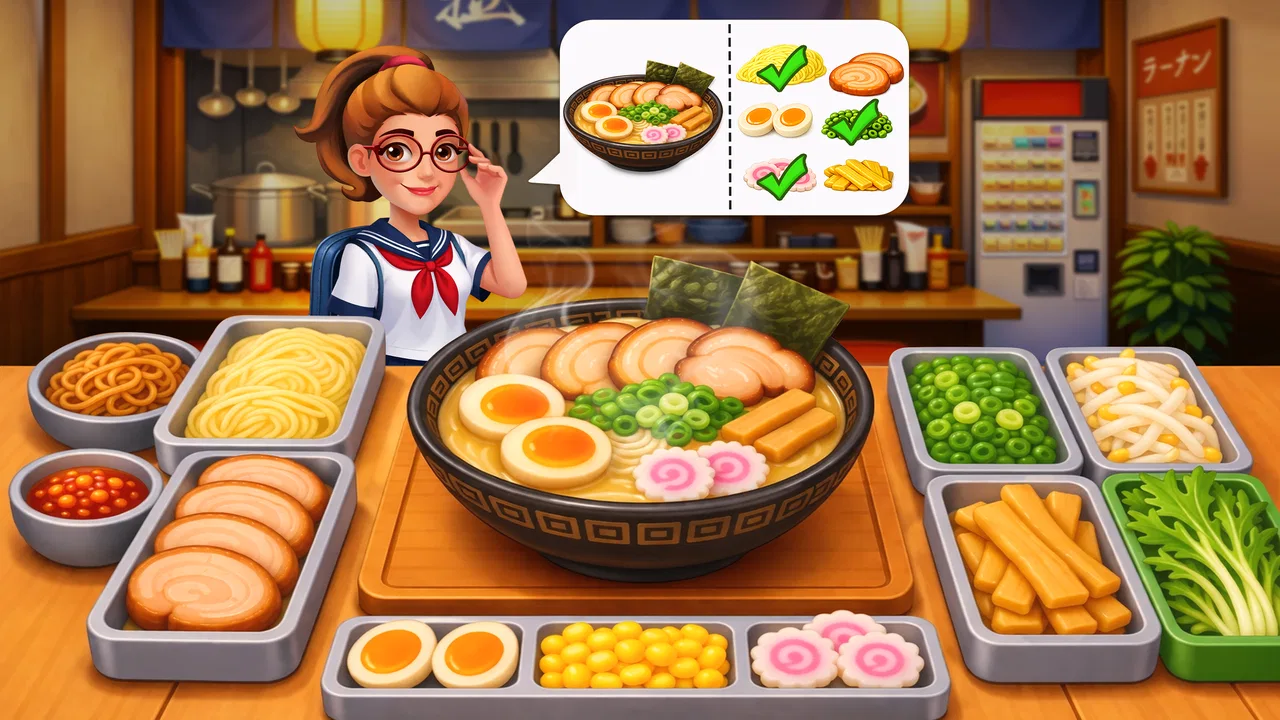
The most useful way to understand the game is to look at its basic workflow. I start by checking what the current activity expects, then focus on preparing the requested food in the right sequence. Sushi and ramen naturally encourage different habits: sushi suggests careful assembly and presentation, while ramen feels more dependent on handling several components in an orderly way. The appeal comes from turning those individual steps into a repeatable kitchen routine.
You May Also Like

 AccuWeather: Weather Radar
AccuWeather Review: A Quick, Clear Forecast for Everyday Decisions
For everyday plans, the best forecast is the one you can understand quickly. AccuWeather makes rain timing, radar, and local conditions easy to act on, with a few trade-offs.

 Hill Climb Racing
Why Hill Climb Racing Still Turns Crashes Into One More Run
A tiny car, a bumpy hill and one more upgrade: Hill Climb Racing keeps resurfacing because its simple chaos makes every near-miss feel personal.

 AliExpress - Shopping App
AliExpress Makes Global Shopping Feel Personal, but Shoppers Bear the Risk
AliExpress turns a global marketplace into a pocket-sized discovery engine. Its reach is useful, its shopping loop compelling, and its trade-offs easy to miss.

 Lords Mobile: Kingdom Wars
Lords Mobile Is a Kingdom-Building Routine, Not a Quick Match
A case-by-case verdict on the building, battles, device demands, and social commitments that make Lords Mobile rewarding for some players and exhausting for others.

 PDF Scanner app - TapScanner
TapScanner Makes Paperwork Easier to Capture, Check, and Share
TapScanner makes scanning with a phone feel less like a rescue operation and more like a dependable step in getting work done. Its capture tools are useful, though not flawless.

 Block Blast!
 Shows How Much a Puzzle Game Can Leave Out
A quiet grid game shows why puzzle players increasingly value instant clarity, repeatable skill and low-pressure play—and where the genre still needs to catch up.
More From Our News Desk
View All News


That routine works particularly well when I have only a few minutes. A realistic use case is playing during a commute, while waiting for an appointment, or taking a short break from work. I can open the game, complete a small cooking session, and put it down without needing to remember a complicated story or a long chain of objectives. The food theme also makes it more inviting than an abstract puzzle because the tasks have an immediately recognizable context.
The adventure category matters here. This is not simply a recipe reference or a simulation intended to teach real Japanese cooking. The dishes provide the setting for game progress, and the movement between Japanese food and broader world dishes keeps the concept from feeling too narrow. I would recommend it to someone who wants a friendly cooking game with a sense of discovery, rather than to someone looking for authentic culinary instruction.
One habit improved my sessions: I stopped treating every order as an isolated challenge. Instead, I looked for the common actions that appeared across dishes and mentally grouped them together. Preparing ingredients, assembling a dish, and completing the serving step become easier when I recognize the pattern before acting. This is a small change, but it reduces hesitation and makes the game feel less frantic when several tasks appear close together.
That approach also helps younger players. The content rating is Everyone, and the food-centered presentation is accessible without requiring specialist knowledge. A child can understand that ingredients need to be combined and dishes need to be completed, while an adult can still enjoy optimizing the sequence. I would still play alongside a younger child at first, not because the theme is difficult, but because explaining the order of actions can make the opening sessions more enjoyable.
What the broader food selection adds
The Japanese foundation gives the game its identity, especially through sushi and ramen, but the invitation to explore world dishes prevents the experience from becoming repetitive too quickly. For me, that variety is more important than having a huge number of individual recipes. A smaller selection with noticeably different preparation habits can be more engaging than a long menu where every dish follows the same steps.
I also like the contrast between familiar and unfamiliar food. Players who already recognize sushi or ramen can immediately understand the goal, while the world-food angle creates a reason to keep exploring. It makes the game suitable for someone who enjoys the idea of travel and discovery but wants that experience expressed through cooking rather than through a conventional map-based adventure.
There is a trade-off, though. Anyone expecting detailed culinary realism may find the game too simplified. The dishes are presented as game objectives, not as lessons about knife technique, ingredient quality, or regional traditions. I see that as a deliberate strength for casual play, but it is also the clearest reason a dedicated cooking simulator or recipe app would be a better choice for a different audience.
Settings and small habits worth checking
Before settling into longer sessions, I recommend checking the available in-game settings and making the presentation comfortable for the way you play. The most practical consideration is whether the visual pace and sound fit your surroundings. If I am playing in a quiet public place, I prefer a less distracting setup; at home, the sound can make the kitchen theme feel more lively. I would adjust these basics early rather than allowing them to interrupt the cooking loop later.
I also pay attention to how I hold the phone. Cooking games often become less comfortable when the player repeatedly reaches across the screen or covers the area where the next action appears. Keeping the device steady and using the same hand position makes the sequence easier to read. This sounds minor, but it matters during repeated sessions, especially when the game presents several ingredients or actions in quick succession.
Another useful check is the device requirement. The game supports Android devices running version 6.0 or later, so it is worth confirming compatibility before planning to play on an older phone or tablet. On a supported device, I would still close unnecessary background apps if the phone is modest, particularly before a longer session. That is not a special trick for this title; it is simply a sensible way to keep a touch-based game responsive.
I would also review purchase controls before handing the phone to a child. The game is free to download, but optional purchases range from $0.99 to $99.99 per item. That wide span makes it especially important to know how the device handles in-app buying. The best routine is to decide in advance whether purchases are part of your plan, then use the platform’s purchase restrictions when children or shared devices are involved.
The presence of optional purchases does not automatically make the game unsuitable for free play, but it changes how I judge its convenience. A player who wants a completely uninterrupted experience should think about purchase prompts and progression pressure before committing time. Someone comfortable with a free-to-start model may find the arrangement acceptable, provided expectations are clear from the beginning.
Faster patterns for repeatable sessions
The most effective speed improvement is not tapping wildly. It is reducing the number of decisions I make while cooking. I first identify the dish, then locate the ingredients and actions I know will be needed, and only after that begin the sequence. This prevents the common mistake of starting one action, pausing to search for another, and losing the rhythm of the order.
For sushi-style tasks, I find it helpful to think in terms of assembly: gather the necessary elements, complete the combination, and finish the presentation without unnecessary detours. For ramen-style tasks, I focus more on the order of preparation and avoid switching attention between unrelated items. These are not secret mechanics; they are practical ways of applying the visual logic of the dishes to the game’s touch controls.
A second improvement is to learn from repetition rather than rushing to memorize everything. After completing a dish, I ask myself where I hesitated. Was the problem finding an ingredient, understanding the next action, or moving between parts of the screen? The answer tells me what to change in the next round. This turns ordinary replay into practice and gives the adventure structure a more deliberate feeling.
I also recommend using short sessions to build consistency before attempting longer play. When I begin with a calm, repeatable sequence, I make fewer mistakes later. This is particularly useful for players who are easily distracted by timers, visual effects, or multiple requests. The goal is not to play aggressively; it is to make each action predictable enough that the game feels comfortable instead of noisy.
For families, a useful routine is to let one player call out the next step while another handles the device. That makes the food theme more social and can help a child understand sequencing without turning the experience into a test. It also reveals whether the game’s instructions are clear enough for a new player. If the process remains confusing even when explained aloud, the game may not be the right fit for someone who wants immediate simplicity.
Players who prefer efficiency should resist the temptation to judge progress only by speed. A fast but inconsistent approach creates more correction work, while a slightly slower pattern that avoids mistakes is easier to repeat. In my experience, the best sessions come from balancing recognition and control: know what the dish needs, but keep enough attention available to respond when the next action differs.
Where the experience reaches its limits
The game’s approachable design is also its main limitation. Because the focus is on accessible cooking adventure, it may not satisfy players who want deep restaurant management, detailed economics, or a highly realistic kitchen simulation. I would choose a more complex management game if my priority were staffing, supply chains, menu pricing, or building a restaurant over a long strategic campaign.
It is also not the best option for someone seeking a serious culinary learning tool. Preparing a virtual bowl of ramen can make the dish feel engaging, but it does not replace guidance about broth, noodles, seasoning, or safe preparation. The game works as entertainment with a food theme; it should not be treated as a substitute for a cookbook or cooking class.
Another consideration is repetition. The core pleasure comes from improving a familiar loop, so players who need constant mechanical change may eventually want something more varied. The world-dish concept helps, but variety in theme is not the same as a completely different type of gameplay. If you dislike repeating preparation patterns, the game may feel comfortable at first and limited later.
The free price makes it easy to try, but the in-app purchase range means I would approach progression with a little discipline. I would not spend simply to remove a moment of impatience. First, I would replay the available cooking pattern, improve my sequence, and decide whether the purchase would genuinely add enjoyment. This is a useful trade-off for any free game, but it is especially relevant here because the basic loop is designed to be repeated.
Version 1.0.3 suggests that the game is still at an early stage of its release history, which shapes my expectations. I approach it as a developing experience rather than a huge, established cooking platform. That does not make it a poor choice, but players who expect years of accumulated content or a very deep feature set should choose a more mature alternative.
Who should try it and who should skip it
I think this is a good match for casual players who enjoy food themes, touch-based tasks, and light exploration. It is also suitable for someone who wants a game that can be played in short bursts without demanding a large time commitment. The Everyone rating makes it approachable for families, while the cooking structure gives adults enough room to develop better habits and chase smoother sessions.
I would recommend it to a friend who enjoys Japanese food and wants a cheerful game inspired by sushi and ramen, especially if that friend also likes discovering dishes from other parts of the world. The combination gives the game a clearer personality than a generic restaurant title. It feels most rewarding when the player enjoys the process of learning a routine and then performing it with fewer pauses.
I would steer a friend elsewhere if they wanted a competitive time-management challenge, a detailed restaurant-building simulation, or authentic culinary education. A puzzle-focused cooking game may be better for someone who wants constant pressure and precise scoring. A management title may be better for someone who wants long-term business decisions. A recipe app or cooking course is the sensible choice for practical kitchen skills.
The game is developed by CSCMobi Publishing and has attracted a 4.7 average from around 795 ratings, with over 100K installs. Those figures suggest that the concept has connected with a meaningful group of players, but I still think personal taste matters more than popularity here. The right question is not whether it looks like a massive simulation; it is whether a relaxed cooking adventure fits the way you want to play.
My final view after settling into the rhythm
Cooking Japan: Restaurant Game works because it keeps its promise focused on the feeling of preparing food and exploring through a chef’s perspective. Sushi and ramen give the opening concept a recognizable center, while the wider selection of dishes adds room for curiosity. I enjoyed it most when I stopped searching for hidden complexity and concentrated on making each cooking sequence cleaner.
The strongest reason to try it is its approachable repeatability. I can play for a short break, practice a dish, and return later without needing a complicated plan. The practical tips are simple but effective: check the presentation settings, protect the device from accidental purchases, organize ingredients mentally before tapping, and treat mistakes as information about the next sequence.
My recommendation is positive but specific. Try it if you want a free adventure game with a Japanese cooking theme, light world-food exploration, and an easy session structure. Keep your expectations realistic about depth, realism, and optional purchases. For me, it is a pleasant choice for relaxed food-themed play, and Cooking Japan: Restaurant Game earns its place on my device when I want something welcoming rather than demanding.
FAQs for Cooking Japan: Restaurant Game
01What is Cooking Japan: Restaurant Game all about?
Cooking Japan: Restaurant Game is a captivating simulation game where players step into the shoes of a master chef in a bustling Japanese restaurant. The game challenges players to prepare authentic Japanese dishes, manage time efficiently, and satisfy customers to progress through various levels. With vibrant graphics and engaging gameplay, it offers an immersive culinary experience.
02Is Cooking Japan: Restaurant Game free to play?
Yes, Cooking Japan: Restaurant Game is free to download and play. However, it contains in-app purchases that allow players to buy additional items, such as special ingredients or kitchen upgrades, to enhance gameplay. These purchases are optional, and players can enjoy the game fully without spending any money.
03What devices can run Cooking Japan: Restaurant Game?
Cooking Japan: Restaurant Game is available for both Android and iOS devices. It runs smoothly on most modern smartphones and tablets, but it's recommended to have the latest OS version for optimal performance. Ensure your device meets the minimum system requirements for the best gaming experience.
04Does Cooking Japan: Restaurant Game require an internet connection?
While Cooking Japan: Restaurant Game can be played offline, certain features, like leaderboards and special events, require an internet connection. Playing online also allows you to receive updates and access new content as it becomes available. Offline play is perfect for enjoying the game on the go without interruptions.
05How can players progress in Cooking Japan: Restaurant Game?
Players progress in Cooking Japan: Restaurant Game by completing cooking challenges, serving dishes on time, and earning customer satisfaction points. As you advance, new recipes and kitchen equipment become available. Strategic upgrades and mastering cooking techniques are key to moving through levels and unlocking new restaurant locations.
Pros
- Engaging gameplay with cultural elements.
- Variety of Japanese dishes to cook.
- User-friendly interface enhances play.
- Regular updates with new challenges.
- Supports offline play for convenience.
Cons
- In-app purchases can be costly.
- Advertisements interrupt gameplay.
- Limited customization options available.
- Requires frequent internet connection.
- Some levels feel repetitive.

Cooking Japan: Restaurant Game
Gallery